

Unknown Story


Storyboard Text
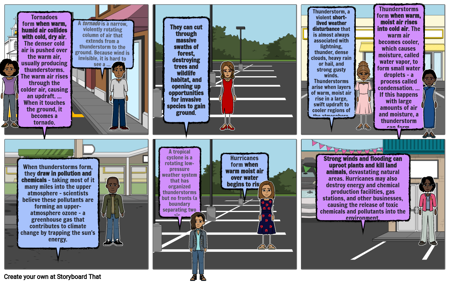
- Tornadoes form when warm, humid air collides with cold, dry air. The denser cold air is pushed over the warm air, usually producing thunderstorms. The warm air rises through the colder air, causing an updraft. ... When it touches the ground, it becomes a tornado.
- A tornado is a narrow, violently rotating column of air that extends from a thunderstorm to the ground. Because wind is invisible, it is hard to see a ...
- They can cut through massive swaths of forest, destroying trees and wildlife habitat, and opening up opportunities for invasive species to gain ground.
- Thunderstorm, a violent short-lived weather disturbance that is almost always associated with lightning, thunder, dense clouds, heavy rain or hail, and strong gusty winds. Thunderstorms arise when layers of warm, moist air rise in a large, swift updraft to cooler regions of the atmosphere.
- Thunderstorms form when warm, moist air rises into cold air. The warm air becomes cooler, which causes moisture, called water vapor, to form small water droplets - a process called condensation. ... If this happens with large amounts of air and moisture, a thunderstorm can form.
- When thunderstorms form, they draw in pollution and chemicals – taking most of it many miles into the upper atmosphere – scientists believe these pollutants are forming an upper-atmosphere ozone – a greenhouse gas that contributes to climate change by trapping the sun's energy.
- A tropical cyclone is a rotating low-pressure weather system that has organized thunderstorms but no fronts (a boundary separating two air ...
- Hurricanes form when warm moist air over water begins to rise
- Strong winds and flooding can uproot plants and kill land animals, devastating natural areas. Hurricanes may also destroy energy and chemical production facilities, gas stations, and other businesses, causing the release of toxic chemicals and pollutants into the environment.