

HAP Comic Strip


Storyboard Text
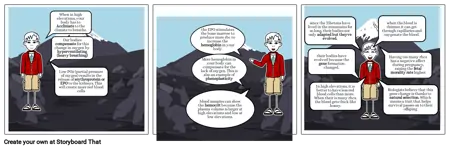
- When in high elevations, your body has to Acclimate to the climate to breathe.
- Our bodies compensate for this change in oxygen by hyperventilating (heavy breathing)
- Low PO2 (partial pressure of oxygen) results in the release of erythroprotein or EPO to the kidneys. This will create more red blood cells
- blood samples can show the hemocrit because the plasma volume is larger at high elevations and low at low elevations.
- the EPO stimulates the bone marrow to produce more rbc to increase the hemoglobin in your body
- More hemoglobin in your body can compensate for the lack of oxygen. This is also an example of phenoplasticity
- since the Tibetans have lived in the mountains for so long, their bodies not only adapted but theyve evolved.
- their bodies have evolved because the gene formation changed.
- In high elevations, it is better to have less red blood cells than more. When their is many rbcs, the blood gets thick like honey.
- when the blood is thinner, it can get through capillaries and oxygenate the blood.
- Biologists believe that this gene change is thanks to natural selection. Which means a trait that helps survival passes on to their offsping
- Having too many rbcs has a negative affect during pregnancy, raising the fetal morality rate higher.