

Loving v. Virginia Court Case


Texte du Storyboard
- In 1802...
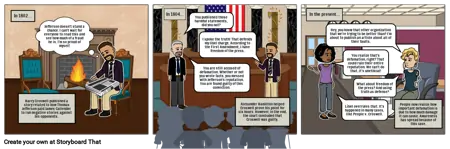
- Harry Croswell published a story related to how Thomas Jefferson paid James Callender to run negative stories against his opponents.
- Jefferson doesn't stand a chance. I can't wait for everyone to read this and see how much of a fraud he is. I'm so proud of myself.
- In 1804...
- You published those harmful statements, did you not?
- You are still accused of defamation. Whether or not you wrote facts, you messed with Jefferson's reputation. You are found guilty of this conviction.
- I spoke the truth! That defends my libel charge. According to the First Amendment, I have freedom of the press.
- Alexander Hamilton helped Croswell prove his point for six hours. However, in the end, the court concluded that Croswell was guilty.
- In the present...
- Hey, you know that other organization that we're trying to be better than? I'm about to publish an article about all of their faults.
- You realize that's defamation, right? That could ruin their entire reputation. We can't do that, it's unethical!
- Libel overrules that. It's happened in many cases, like People v. Croswell.
- What about freedom of the press? And using truth as defense?
- People now realize how important defamation is due to how much damage it can cause. Awareness has spread because of this case.