

Untitled Storyboard


स्टोरीबोर्ड पाठ
- फिसलना: 1
- “We’re getting close to start time, and we still have several things that aren’t ready.”
- “Okay... we have a lot to fix and not much time.”
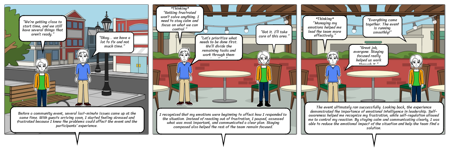
- Before a community event, several last-minute issues came up at the same time. With guests arriving soon, I started feeling stressed and frustrated because I knew the problems could affect the event and the participants’ experience.
- फिसलना: 2
- *Thinking*“Getting frustrated won’t solve anything. I need to stay calm and focus on what we can control.”
- “Got it. I’ll take care of this area.”
- “Let’s prioritize what needs to be done first. We’ll divide the remaining tasks and work through them together.”
- I recognized that my emotions were beginning to affect how I responded to the situation. Instead of reacting out of frustration, I paused, assessed what was most important, and communicated a clear plan. Staying composed also helped the rest of the team remain focused.
- फिसलना: 3
- *Thinking*“Managing my emotions helped me lead the team more effectively.”
- “Everything came together. The event is running smoothly!”
- “Great job, everyone. Staying focused really helped us work through it.”
- The event ultimately ran successfully. Looking back, the experience demonstrated the importance of emotional intelligence in leadership. Self-awareness helped me recognize my frustration, while self-regulation allowed me to control my reaction. By staying calm and communicating clearly, I was able to reduce the emotional impact of the situation and help the team find a solution.