

Untitled Storyboard


Siužetinės Linijos Tekstas
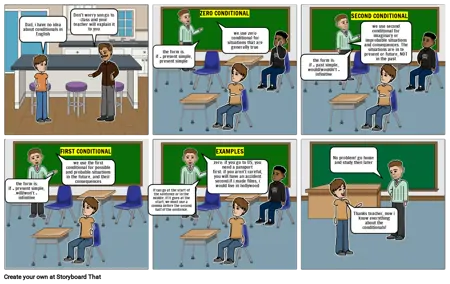
- Dad, i have no idea about conditionals in English
- Don't worry son go to class and your teacher will explain it to you
- the form is:if + present simple,present simple
- ZERO CONDITIONAL
- we use zero conditional for situations that are generally true
- the form is:if + past simple, would/wouldn't + infinitive
- SECOND CONDITIONAL
- we use second conditional for imaginary or improbable situations and consequences. The situations are in te present or future, NOT in the past
- the form is:if + present simple,will/won't + infinitive
- FIRST CONDITIONAL
- we use the first conditional for possible and probable situations in the future, and their consequences
- If can go at the start of the sentence or in themiddle. If it goes at the start, we must use acomma before the second half of the sentence.
- zero: if you go to US, you need a passportfirst: if you aren't careful, you will have an accidentsecond:if i made films, i would live in hollywood
- EXAMPLES
- No problem! go home and study then later
- Thanks teacher, now i know everything about the conditionals!