

 Registruotis kaip mokytojas


Siužetinės Linijos Tekstas
- Skaidrė: 1
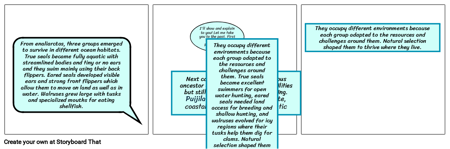
- From enaliarctos, three groups emerged to survive in different ocean habitats. True seals became fully aquatic with streamlined bodies and tiny or no ears and they swim mainly using their back flippers. Eared seals developed visible ears and strong front flippers which allow them to move on land as well as in water. Walruses grew large with tusks and specialized mouths for eating shellfish.
- Skaidrė: 2
- I'll show and explain to you! Let me take you to the past. First is the Potamotherium
- They occupy different environments because each group adapted to the resources and challenges around them. True seals became excellent swimmers for open water hunting, eared seals needed land access for breeding and shallow hunting, and walruses evolved for icy regions where their tusks help them dig for clams. Natural selection shaped them to thrive where they live.
- Next came Puijila, a more amphibious ancestor with stronger swimming abilities but still with fur and legs for walking. Puijila lived in a cool, temperate, coastal environment in the Arctic
- Skaidrė: 3
- They occupy different environments because each group adapted to the resources and challenges around them. Natural selection shaped them to thrive where they live.
Sukurta daugiau nei 40 milijonų siužetinių lentų
Nereikia Atsisiuntimų, Nereikia Kredito Kortelės ir Nereikia Prisijungti!
