

week 12


نص القصة المصورة
- الانزلاق: 1
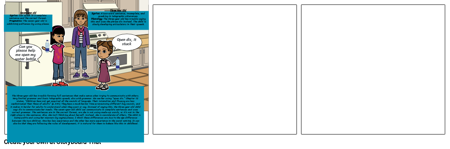
- Three Year OldSyntax: A two-word sentence, incomplete, and speaking in telegraphic utterances. Phonology: The three-year-old has trouble saying this and uses the phrase dis instead. The child is slowly developing articulators in their speech.
- Seven year oldSyntax: Can speak in a complete sentence and the correct format. Pragmatics: The seven-year-old is exhibiting politeness by using please.
- Open dis, it stuck
- Can you please help me open my water bottle
- The three-year-old has trouble forming full sentences that make sense when trying to communicate with others. Very limited grammar and basic telegraphic speech, also with grammar. We see her using “open dis.” Chapter 12 states, “Children have not yet acquired all the sounds of language. Their intonation and fluency are less sophisticated than those of adults” (p.341). They have a much harder time pronouncing different key sounds, and it makes it harder for adults to understand what they want or say. Instead of saying this, the three-year-old child says dis to communicate her needs. The seven-year-old child can communicate in complete sentences and uses correct grammar. The sentences are in the correct format, are she is not using made-up words, or it’s not in the right place in the sentence. Also, she isn’t thinking about herself, instead, she is considerate of others. The child is being polite and using her manners by saying please. I think these differences are due to the age difference between the two children. One has less experience and the other has more experience in the social setting. It can also be that they are following the rules of development; it is natural for them to behave like this in childhood.