

 Registrer dig som lærer
Untitled Storyboard


Storyboard Tekst
- Glide: 1
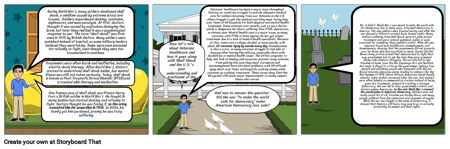
- During World War I, many soldiers developed shell shock, a condition caused by extreme stress and trauma. Soldiers experienced shaking, confusion, nightmares, and even paralysis. At first, doctors thought it was caused by explosions damaging the brain, but later they realized it was a psychological response to war. The term "shell shock" was first used in 1915 by British doctors. Many soldiers were punished instead of treated, as some military leaders believed they were faking. Some were even executed for refusing to fight, even though they were too traumatized to continue.
- Treatments were often harsh and ineffective, including electric shock therapy. After World War I, doctors started to understand shell shock better, but mental illness was still not taken seriously. Today, shell shock is known as Post-Traumatic Stress Disorder (PTSD) and is treated with therapy and medication.
- One famous case of shell shock was Private Harry Farr, a British soldier in World War I. He fought in many battles but started shaking and refusing to fight. Doctors thought he was faking it, so the army executed him for cowardice in 1916. In 2006, his family got him pardoned, proving he was truly suffering.
- Glide: 2
- Veterans’ healthcare has been a major issue throughout history, as countries struggle to provide adequate medical care for soldiers returning from war. Veterans in the U.S. often struggle to get the medical care they need, facing long wait times at VA hospitals for both physical and mental health treatment. Some veterans wait months just to see a doctor, which is dangerous for those suffering from PTSD, depression, or chronic pain. Mental health care is a major issue, as many veterans with PTSD or brain injuries do not get proper treatment due to a lack of mental health specialists. Because of this, some turn to drugs, alcohol, or even suicide, with about 22 veterans dying by suicide every day. Homelessness is also a crisis, as many veterans struggle to find jobs or housing after leaving the military, especially those with disabilities or mental health issues. The VA has programs to help, but lack of funding and resources prevent many veterans from getting the care they need. Corruption and mismanagement have also been problems, with VA officials lying about wait times and hospitals wasting money while veterans go without treatment. These issues show that the VA system still needs major improvements to really support those who served.
- Now let's talk about Veterans Healthcare and how it goes along with Shell Shock and the U.S.'s poor understanding and treatment of the two.
- And now to answer the question : Did the war “to make the world safe for democracy” make American Democracy less safe?
- Glide: 3
- No, it didn't. World War I was meant to make the world safe for democracy, but in many ways, it harmed democracy in America. The way soldiers were treated during and after the war showed a failure to protect basic human rights. Many soldiers suffering from shell shock were not given proper treatment and were instead punished, jailed, or even executed for something they couldn’t control. After the war, veterans faced poor healthcare, unemployment, and homelessness, showing that the government did not properly care for those who had sacrificed so much. Events like the Bonus Army protest proved that veterans had to fight their own government just to get the help they were promised. Along with veterans’ struggles, the war also led to less freedom at home. Laws like the Espionage Act and Sedition Act made it illegal to criticize the government, limiting free speech and punishing people who disagreed with the war. Racial tensions also grew worse, leading to violence like the Red Summer of 1919, where African Americans faced deadly attacks. Labor strikes increased after the war, but workers were often labeled as communists or traitors instead of being given fair treatment. Instead of creating a stronger democracy, the war led to fear, government control, and division among Americans. In the end, World War I exposed the weaknesses in American democracy. Soldiers were not really cared for at all, freedom was barely there, and many people suffered from discrimination and economic struggles. While the war was fought in the name of democracy, it showed that America still had a long way to go in actually protecting its people and their rights.
Over 40 millioner storyboards skabt
Ingen Downloads, Intet Kreditkort og Intet Login Nødvendigt for at Prøve!
