

 Registrer dig som lærer
Women's Rights


Storyboard Tekst
- Glide: 1
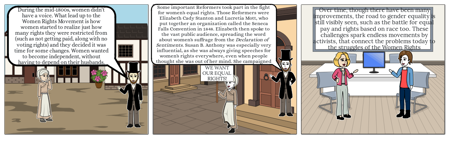
- During the mid-1800s, women didn't have a voice. What lead up to the Women Rights Movement is how women started to realize just how many rights they were restricted from (such as not getting paid, along with no voting rights) and they decided it was time for some changes. Women wanted to become independent, without having to depend on their husbands.
- Glide: 2
- Some important Reformers took part in the fight for women's equal rights. Those Reformers were Elizabeth Cady Stanton and Lucretia Mott, who put together an organization called the Seneca Falls Convention in 1848. Elizabeth then spoke to the vast public audience, spreading the word about women's suffrage from the Declaration of Sentiments. Susan B. Anthony was especially very influential, as she was always giving speeches for women's rights everywhere, even when people thought she was out of her mind. She campaigned countless times as well.
- WE WANT OUR EQUAL RIGHTS!
- Glide: 3
- Over time, though there have been many improvements, the road to gender equality is still visibly seen, such as the battle for equal pay and rights based on race too. These challenges spark endless movements by activists, that connect the problems today to the struggles of the Women Rights Movement.
Over 40 millioner storyboards skabt
Ingen Downloads, Intet Kreditkort og Intet Login Nødvendigt for at Prøve!
