

 Als Lehrer/in registrieren
Untitled Storyboard


Storyboard-Text
- Gleiten: 1
- Bioethics
- Gleiten: 2
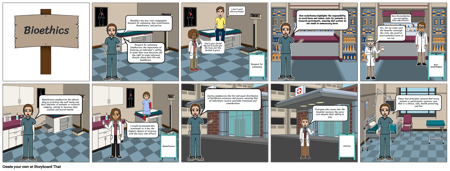
- Bioethics has four core components: Respect for autonomy, Non-maleficence, Beneficence, and justice
- Respect for autonomy Emphasizes the importance of honoring an individual's ability to make their own decisions and the right to make informed choices about their life and healthcare.
- Gleiten: 3
- I don't want this treatment
- That’s your choice! My job is to give you the facts, but the decision is yours.
- Respect for autonomy
- Gleiten: 4
- Non-maleficence highlights the responsibility to avoid harm and reduce risks for patients or research participants, ensuring that actions do not result in unnecessary harm.
- Gleiten: 5
- Does the medication you are making have side effects?
- Yes, but we make sure the benefits outweigh the risks. We avoid as much potential harm as we can.
- Non-maleficence
- Gleiten: 6
- Beneficence emphasizes the ethical duty to prioritize the well-being and best interests of patients or research subjects, aiming to increase their welfare and overall health.
- Gleiten: 7
- I would recommend this treatment as it has the highest chance of recovery with the least side effects
- Beneficence
- Gleiten: 8
- Justice emphasizes the fair and equal distribution of healthcare resources and access, ensuring that all individuals receive equitable treatment and consideration
- Gleiten: 9
- Everyone who comes into the hospital receives the same care despite their ability to pay
- Justice
- Gleiten: 10
- These four principles ensures that every patient or participants receives care that is a choice, safe, health promoting, and fair
Mehr als 40 Millionen Storyboards erstellt
Keine Downloads, Keine Kreditkarte und Kein Login zum Ausprobieren Erforderlich!
