

Untitled Storyboard


Texto del Guión Gráfico
- Deslizar: 1
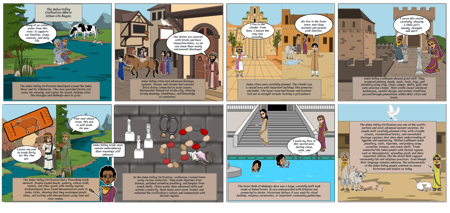
- The Indus Valley Civilisation-Where Urban Life Began.
- Many of us collect water from this river; it supports our families, crops, animals, and daily life.
- The Indus Valley Civilization developed around the Indus River and its tributaries. The river provided fertile soil, water for farming, and routes for travel, helping cities like Harappa and Mohenjo-daro to grow.
- Deslizar: 2
- Our drains are covered with bricks and have inspection holes, so we can clean them easily and prevent blockages.
- Indus Valley cities had advanced drainage systems. Houses and streets had covered brick drains connected to main sewers. Wastewater flowed out of the city, showing strong planning, cleanliness, and knowledge of sanitation.
- Deslizar: 3
- We live in the lower town, near busy markets and streets with families.
- I live in the citadel. From here, I ensure the city runs smoothly.
- Indus cities were carefully planned. The citadel was a raised area with important buildings like granaries and baths. The lower town had houses and markets laid out in straight streets forming a grid pattern.
- Deslizar: 4
- I carve this statue carefully, showing a little girl’s beauty, strength, and spirit.
- Indus Valley craftsmen showed great skill. They produced pottery, beads, seals, tools, toys, and jewellery using clay, stone, copper, shells, gold, and semi precious stones. Their crafts reveal advanced techniques, careful design, and artistic traditions passed through generations within their cities and towns.
- Deslizar: 5
- Your seal shows trust; this pot is well made for you.
- I press my seal to trade fairly for this fine pot.
- The Indus Valley Civilization had a flourishing trade network. People traded beads, pottery, cotton cloth, metals, and other goods with nearby regions. Archaeologists have found Mesopotamian seals in Indus cities, showing that they exchanged goods, ideas, and writing with Mesopotamia using land and river routes.
- Deslizar: 6
- Indus Valley trade seals remain undeciphered, their meanings still unknown.
- In the Indus Valley Civilization, craftsmen created items using various materials. They made figurines from faience, polished carnelian jewellery, and bangles from conch shells. These works show advanced skills and artistic creativity. Such items were worn, traded, and reflected the civilization’s culture and connections with distant regions.
- Deslizar: 7
- I wash my face in this sacred pool, feeling clean, calm, and blessed.
- The Great Bath at Mohenjo-daro was a large, carefully built tank made of baked bricks. It was waterproofed with bitumen and connected to drains. Historians believe it was used for ritual bathing, religious ceremonies, or important community gatherings.
- Deslizar: 8
- The Indus Valley Civilization was one of the world’s earliest and most advanced ancient societies. Its people built carefully planned cities with straight streets, standardized bricks, and remarkable drainage systems that show their understanding of hygiene and engineering. Skilled craftsmen made jewellery, seals, figurines, and pottery using carnelian, faience, and conch shells. Trade connected the Indus people with distant regions such as Mesopotamia, spreading goods and ideas. Important edifces like the Great Bath suggest community life and religious practices. Even though their language remains unknown, the achievements of the Indus Valley people continue to amaze historians and inspire us today.