

 Regístrate como profesor
Part 1


Texto del Guión Gráfico
- Cretaceous Period
- Cretaceous Period 101
- Introduction
- Supercontinent Rifting
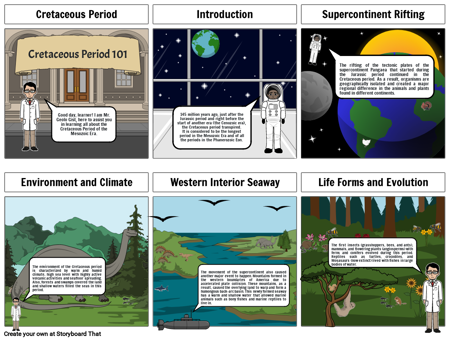
- The rifting of the tectonic plates of the supercontinent Pangaea that started during the Jurassic period continued in the Cretaceous period. As a result, organisms are geographically isolated and created a major regional difference in the animals and plants found in different continents.
- Environment and Climate
- The environment of the Cretaceous period is characterized by warm and humid climate, high sea level with highly active volcanic activities and seafloor spreading. Also, forests and swamps covered the land and shallow waters filled the seas in this period.
- Good day, learner! I am Mr. Geolo Gist, here to assist you in learning all about the Cretaceous Period of the Mesozoic Era.
- Western Interior Seaway
- 145 million years ago, just after the Jurassic period and right before the start of another era (the Cenozoic era), the Cretaceous period transpired. It is considered to be the longest period in the Mesozoic Era and of all the periods in the Phanerozoic Eon.
- The movement of the supercontinent also caused another major event to happen. Mountains formed in the western boundaries of America due to accelerated plate collision. These mountains, as a result, caused the overlying land to warp and form a humongous back-arc basin. This newly formed seaway has a warm and shallow water that allowed marine animals such as bony fishes and marine reptiles to live in.
- Life Forms and Evolution
- The first insects (grasshoppers, bees, and ants), mammals, and flowering plants (angiosperms) with ferns and conifers evolved during this period. Reptiles such as turtles, crocodiles, and Mosasaurs (now extinct) lived with fishes in large bodies of water.
Más de 40 millones de guiones gráficos creados
¡Sin Descargas, sin Tarjeta de Crédito y sin Necesidad de Iniciar Sesión Para Probar!
