

Encarcelamiento de japoneses estadounidenses durante los términos de la Seg


Storyboard Descripción
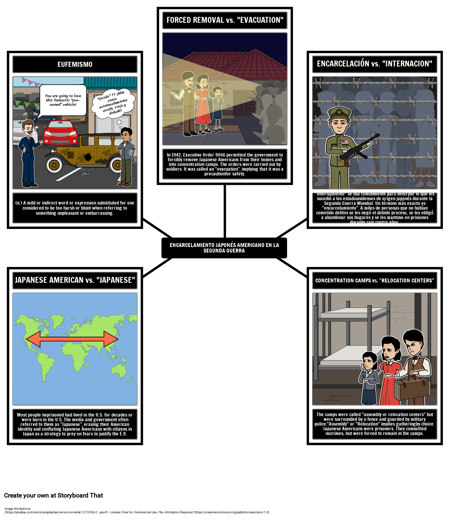
Es útil para los estudiantes obtener una vista previa del vocabulario y los términos importantes cuando estudian eventos históricos para ayudar a darles contexto. Este guión gráfico también se centra en los eufemismos empleados por el gobierno de los EE. UU. Y los medios de comunicación para describir el encarcelamiento de japoneses estadounidenses durante la Segunda Guerra Mundial, alentando a los estudiantes a analizar la importancia de las palabras para describir con precisión eventos históricos.
Texto del Guión Gráfico
- Deslizar: 1
- FORCED REMOVAL vs. "EVACUATION"
- In 1942, Executive Order 9066 permitted the government to forcibly remove Japanese Americans from their homes and into concentration camps. The orders were carried out by soldiers. It was called an "evacuation”, implying that it was a precautionfor safety.
- Deslizar: 2
- ENCARCELACIÓN vs. "INTERNACION"
- "Internamiento" se usa comúnmente para describir lo que les sucedió a los estadounidenses de origen japonés durante la Segunda Guerra Mundial. Un término más exacto es "encarcelamiento". A miles de personas que no habían cometido delitos se les negó el debido proceso, se les obligó a abandonar sus hogares y se les mantuvo en prisiones durante casi cuatro años.
- Deslizar: 3
- CONCENTRATION CAMPS vs. "RELOCATION CENTERS"
- The camps were called "assembly or relocation centers" but were surrounded by a fence and guarded by military police."Assembly" or "Relocation" implies gatheringby choice. Japanese Americans were prisoners. They committed nocrimes, but were forced to remain in the camps.
- Deslizar: 4
- JAPANESE AMERICAN vs. "JAPANESE"
- Most people imprisoned had lived in the U.S. for decades or were born in the U.S. The media and government often referred to them as "Japanese”, erasing their American identity and conflating Japanese Americans with citizens in Japan as a strategy to prey on fears to justify the E.O.
- Deslizar: 5
- EUFEMISMO
- You are going to love this fantastic "pre-owned" vehicle!
- "Usado" ?? ¡Más como extremadamente usado, viejo y dañado!
- (n.) A mild or indirect word or expression substituted for one considered to be too harsh or blunt when referring to something unpleasant or embarrassing.
Atribuciones de la Imagen
- https://pixabay.com/en/closing-barbed-wire-iron-metal-1373306/ - gisoft - (Licencia Free for Commercial Use / No Attribution Required (https://creativecommons.org/publicdomain/zero/1.0) )