

CEP Page #1


טקסט Storyboard
- שקופית: 1
- -
- -
- -
- -
- :)
- :)
- :)
- :)
-
-
-
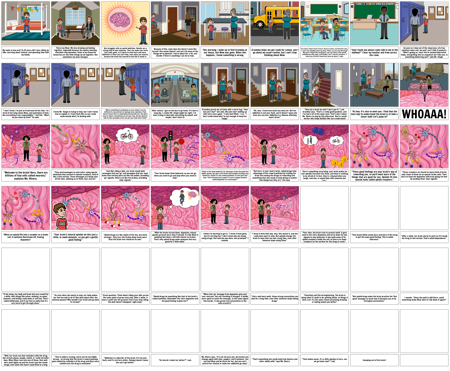
- My name is Joey and I’m 10 years old! I love riding my bike, learning about science, and spending time with my family.
- שקופית: 2
- This is my Mom. We love drawing and baking together, especially because she makes amazing chocolate chip pancakes. Some of my favourite memories are the little things we do together. But sometimes my mom changes.
- שקופית: 3
- She struggles with an opioid addiction. Opioids are a strong kind of pain medicine. They can make your brain feel really good, so it starts to want more and more. Addiction is when you can't stop, even when you want to, because the brain has learned to feel like it needs it.
- שקופית: 4
- Because of this, some days she doesn’t seem like herself. She seems distant, and can't do many of the things we’ve planned. I worry about her a lot, and wonder if there's anything I can do to help.
- שקופית: 5
- This morning, I woke up to find Grandma at our house, but Mom was gone. When this happens, I know something is wrong.
- שקופית: 6
- Grandma helps me get ready for school, and I go about my usual routine, but I can’t stop thinking about Mom.
- שקופית: 7
- At school, I find it hard to focus. Even in science, my favourite class, I can’t stop thinking about my mom. “Dude, are you even listening? We have to finish this worksheet!” says my friend. I find myself bubbling up with anger, until finally I can’t control it anymore: “I heard you, Patrick! I know! Just leave me alone," I reply.
- שקופית: 8
- “Joey! Could you please come talk to me in the hallway?” I hear my teacher ask from across the room.
- שקופית: 9
- As soon as I step out of the classroom, all of my emotions come over me and I can’t hide it anymore. “What’s going on, Joey? You’ve seemed distracted today, and getting into an argument isn’t like you. Is something bothering you?” asks Mr. Singh.
- שקופית: 10
- "I don’t know, I’m just so frustrated all the time. I'm tired of worrying about Mom, and sometimes it feels like everything is my responsibility,” I tell him. "What do you mean by that?" he asks.
- שקופית: 11
- I know Mr. Singh is trying to help, but I don't know how to explain it. It just feels like no one really understands what I’m dealing with.
- שקופית: 12
- “When something is weighing on your mind, it can be difficult to concentrate or manage your emotions. That doesn't mean there's something wrong with you. You don't have to figure everything out on your own. Do you mind if I talk to your grandma so we can get you some more help?”
- שקופית: 13
- After school, I get on the bus to go home. It’s been a long day. I realize Mr. Singh might be right. I've been trying to deal with everything by myself, and maybe I don't have to.
- שקופית: 14
- Grandma greets me at home with a warm hug. “How was your day?” she asks. My eyes start welling up with tears once again. “I just want Mom,” I cry. “I don’t understand why I’m not enough to keep her happy.”
- שקופית: 15
- “Oh, Joey. I know how much you miss her. But her addiction is not your fault, and it doesn’t mean she loves you any less. Addiction is a disease affecting mom’s brain.”
- שקופית: 16
- “How can a brain be sick? I don’t get it,” I ask. Grandma says, “That’s a really good question, and I’ve had a lot of the same ones. That’s why I asked Ms. Rivera to stop by this afternoon. She’s a social worker who helps families like ours understand addiction.”
- שקופית: 17
- “Hi Joey. It’s nice to meet you. I find that the best way to understand the brain is to take a closer look! Let’s jump in!"
- שקופית: 18
- WHOAAA!
- שקופית: 19
- “Welcome to the brain! Here, there are billions of tiny cells called neurons," explains Ms. Rivera.
- שקופית: 20
- "They send messages to each other using special chemicals that connect to special receptors, kind of like a lock and key. These messages are being sent all the time, allowing us to think, feel, and act.”
- שקופית: 21
-
- “Just like riding a bike, our brain needs both messages that say 'go' and messages that say 'stop'. Some lock and key pairs act like the pedals, providing 'go' signals. Others act like the brakes, providing 'stop' signals.”
- שקופית: 22
- ”Your brain keeps them balanced, so you can go when you need to go and stop when you need to stop.”
- שקופית: 23
- :)
- :)
- :)
- “Some of the most powerful 'go' messages travel through the limbic system, the part of the brain that handles feelings and memories. Inside it is the reward pathway. It’s the part that says, ‘That felt good, do it again!’ It uses a happy chemical called dopamine as a messenger."
- שקופית: 24
- "But here, in your mom’s brain, opioid drugs take advantage of the reward pathway by tricking her brain into seeing the drugs as rewarding and something that she needs to keep doing no matter how dangerous they are,” she says.
- שקופית: 25
-
-
-
-
- :)
- :)
- “Here’s something surprising: your brain makes its own opioids! Everyone has them, and they’re nothing to be afraid of. In fact, they’re released when you laugh, exercise, or spend time with someone you love."
- שקופית: 26
- :)
- "These good feelings are your brain’s way of rewarding you, so you’ll want more of the things that are good for you. Opioids fit into special locks called opioid receptors.”
- שקופית: 27
-
-
-
- “These receptors are found on many kinds of brain cells. Some of them sit on special ‘brake cells.’ Their job is to keep the dopamine cells from going too fast by sending them ‘stop’ signals."
- שקופית: 28
- -
- -
- :)
- :)
- :)
- :)
- :)
-
-
- "When an opioid fits into a receptor on a brake cell, it switches that brake off, freeing dopamine."
- שקופית: 29
- :)
- :)
- :)
- “Your brain’s natural opioids do this just a little, in small amounts, so you get a gentle good feeling."
- שקופית: 30
- -
- -
- :)
- :)
- :)
- :)
- :)
- :)
- :)
- "Opioid drugs are like copies of the key, but much stronger. They turn the brakes down much more than the brain ever would on its own."
- שקופית: 31
-
- “With the brake turned down, dopamine release speeds up much more than it should. It’s like Mom is pedaling fast down a hill with almost no brakes. That’s why opioid drugs make someone feel very good for a little while.”
- שקופית: 32
- I think I'm starting to get it. "I know it feels good, but it's hurting her! I don’t know why she keeps using drugs. She said she was done, she promised!” I exclaim.
- שקופית: 33
- “I know it feels that way, Joey. She meant it, and she really does want to stop. But opioids change the brain in ways that can last a long time, even after someone stops using them."
- שקופית: 34
- “Over time, the brain tries to protect itself. It gets used to the extra dopamine and turns down its own signals to stay balanced. It also pulls some of its opioid receptors inside the cell, so there are fewer receptors on the surface for the drug to reach."
- שקופית: 35
- "That means Mom needs more and more of the drug to get the same good feeling. This is called tolerance.”
- שקופית: 36
- “After a while, her brain starts to work as if it needs the drug to feel normal. That’s called dependence."
- שקופית: 37
- "If she stops, her body and brain feel very unwell for a while, with things like aches, shaking, an upset stomach, and feeling really down or worried. That’s called withdrawal, and it can feel so awful that it’s very hard to get through alone.”
- שקופית: 38
- “So even when she wants to stop, her body makes her feel too sick to do it? But what about after the sickness passes? Why wouldn’t her brain just go back to normal?”
- שקופית: 39
- “Great question. Think about riding your bike across the same patch of grass every day. After a while, it wears a path into the ground. Even if you stop riding, the path doesn’t disappear right away.”
- שקופית: 40
- “Opioid drugs do something like that in the brain’s reward pathway. Remember the extra dopamine and the good feeling it gives her?”
- שקופית: 41
- “When this ‘go’ message from dopamine gets sent over and over, the cell receiving it changes. It builds more spots to catch the message, so the same signal hits harder. It also grows new connections to the cells around it."
- שקופית: 42
- "Like a well-worn path, these strong connections can stay for a long time, even after someone stops taking drugs.”
- שקופית: 43
- “Scientists call this strengthening. The brain is doing what it’s built to do: getting better at things it does a lot. It’s the same reason practicing drawing or baking makes you better."
- שקופית: 44
- "But opioid drugs make the brain practice the ‘feel good’ message so much that it becomes one of its strongest connections.”
- שקופית: 45
- I wonder, “Since the path is still there, could something make Mom want to ride down it again?”
- שקופית: 46
- “Well, her brain can link reminders with the drug, like certain places, people, smells, or really stressful days. When Mom runs into one of those, that well-worn path lights up and her brain says she needs drugs, even when she hasn’t used them in a long time."
- שקופית: 47
- "This is called a craving, and it can be incredibly strong – so strong that the brain’s reward pathway gets excited by reminders of the drug and then extra excited once the drug is consumed.”
- שקופית: 48
- "Addiction is a disorder of the brain; it’s not your fault, and it’s not hers either. Relapse doesn’t mean she can’t get better.”
- שקופית: 49
- “So how do I make her better?” I ask.
- שקופית: 50
- Ms. Rivera says, “It’s not all up to you, but brains can change again with time, support, and treatment. You can love Mom and be there for her, but you can't control her choices or make her addiction go away."
- שקופית: 51
- "That’s something she needs help from doctors and other adults with,” says Ms. Rivera.
- שקופית: 52
- “That makes sense. It’s a little squishy in here, can we go home now?" I ask.
- שקופית: 53
- *jumping out of the brain*
- שקופית: 54
-