

Untitled Storyboard


טקסט Storyboard
- שקופית: 1
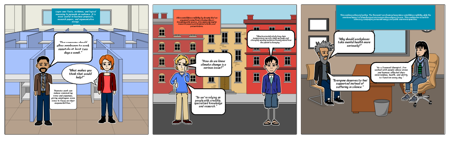
- Logos uses facts, evidence, and logical reasoning to persuade an audience. It is most useful in business proposals, research papers, and argumentative essays.
- “Our company should allow employees to work remotely at least two days a week.”
- “What makes you think that would help?”
- “Remote work can reduce commuting time and expenses, giving employees more time to focus on their responsibilities.”
- שקופית: 2
- Ethos establishes credibility by showing that an argument comes from a trustworthy or knowledgeable source. It is commonly used in research papers, professional articles, and presentations.
- “Climate scientists study long-term temperature records, rising sea levels, and changing weather patterns to understand how the planet is changing.”
- “How do we know climate change is a serious issue?”
- “So we're relying on people with credible, specialized knowledge and research.”
- שקופית: 3
- This combines ethos and pathos. The therapist's professional experience establishes credibility, while the emotional impact of stress/burnout encourages the audience to care. This combination is useful in advocacy campaigns, persuasive essays, and public awareness speeches.
- “Why should workplaces take mental health more seriously?”
- “As a licensed therapist, I've worked with people whose stress and burnout affected their relationships, health, and ability to function every day.”
- “Everyone deserves to feel supported instead of suffering in silence.”