

the nullification crisis


Süžeeskeem Tekst
- Libisema: 1
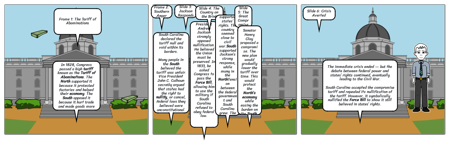
- Frame 1: The Tariff of Abominations
- In 1828, Congress passed a high tariff known as the Tariff of Abominations. The North supported it because it protected factories and helped their economy. The South opposed it because it hurt trade and made goods more expensive.
- Libisema: 2
- Slide 3: Jackson Responds
- Frame 2: Southern Anger
- Slide 4: The Country on the Brink
- Slide 5: The Great Compromise
- supported states’ rights. The country seemed close to civil war.South supported Jackson’s strong response, while many in the NorthTension between the federal government and South Carolina grew. The
- President Andrew Jackson strongly opposed nullification. He believed the Union must be preserved. In 1833, he asked Congress to pass the Force Bill, allowing him to use the military if South Carolina refused to obey federal law.
- Senator Henry Clay proposed a compromise. The new plan would gradually lower the tariff over time. This would protect the North’s economy while easing the burden on the South.
- South Carolina declared the tariff null and void within its borders.Many people in the South believed the tariff was unfair. Vice President John C. Calhoun secretly argued that states had the right to nullify, or cancel, federal laws they believed were unconstitutional.
- Libisema: 3
- Slide 6: Crisis Averted
- The immediate crisis ended — but the debate between federal power and states’ rights continued, eventually leading to the Civil War.South Carolina accepted the compromise tariff and repealed its nullification of the tariff. However, it symbolically nullified the Force Bill to show it still believed in states’ rights.