

Comic


Süžeeskeem Tekst
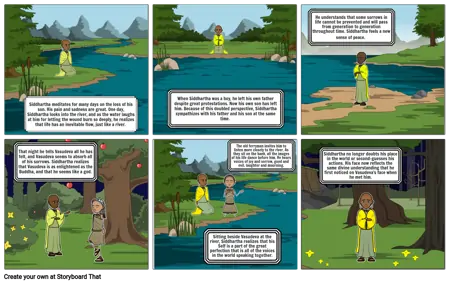
- Siddhartha meditates for many days on the loss of his son. His pain and sadness are great. One day, Siddhartha looks into the river, and as the water laughs at him for letting the wound burn so deeply, he realizes that life has an inevitable flow, just like a river.
- When Siddhartha was a boy, he left his own father despite great protestations. Now his own son has left him. Because of this doubled perspective, Siddhartha sympathizes with his father and his son at the same time.
- He understands that some sorrows in life cannot be prevented and will pass from generation to generation throughout time. Siddhartha feels a new sense of peace.
- That night he tells Vasudeva all he has felt, and Vasudeva seems to absorb all of his sorrows. Siddhartha realizes that Vasudeva is as enlightened as the Buddha, and that he seems like a god.
- Sitting beside Vasudeva at the river, Siddhartha realizes that his Self is a part of the great perfection that is all of the voices in the world speaking together.
- The old ferryman invites him to listen more closely to the river. As they sit on the bank, all the images of his life dance before him. He hears voices of joy and sorrow, good and evil, laughter and mourning.
- Siddhartha no longer doubts his place in the world or second-guesses his actions. His face now reflects the same divine understanding that he first noticed on Vasudeva’s face when he met him.