

Natalie


Kuvakäsikirjoitus Teksti
- Geography
- Religion
- Achievements
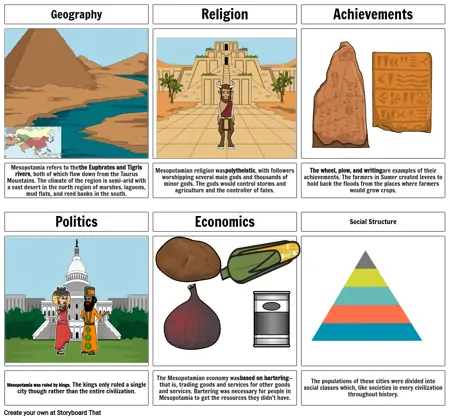
- Mesopotamia refers to the the Euphrates and Tigris rivers, both of which flow down from the Taurus Mountains. The climate of the region is semi-arid with a vast desert in the north region of marshes, lagoons, mud flats, and reed banks in the south.
- Politics
- Mesopotamian religion was polytheistic, with followers worshipping several main gods and thousands of minor gods. The gods would control storms and agriculture and the controller of fates.
- Economics
- The wheel, plow, and writing are examples of their achievements. The farmers in Sumer created levees to hold back the floods from the places where farmers would grow crops.
- Social Structure
- Mesopotamia was ruled by kings. The kings only ruled a single city though rather than the entire civilization.
- The Mesopotamian economy was based on bartering—that is, trading goods and services for other goods and services. Bartering was necessary for people in Mesopotamia to get the resources they didn't have.
- The populations of these cities were divided into social classes which, like societies in every civilization throughout history.