

Creating the Underwater Drone


Storyboard Tekst
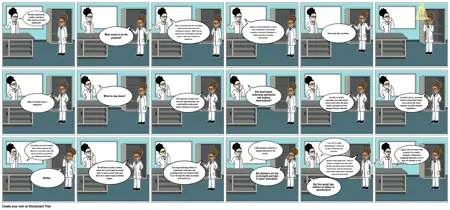
- We have experienced another road block with regards to trench exploration
- What seems to be the problem?
- There are increasing risks in sending more than two men down into underwater trenches. Right now we only have the technology to send two men at a time into a trench in a submarine-
- -making it almost impossible to send a team of specialists, professional scientists, and marine biologists to collect specimens and make observations.
- That seems like a problem...
- What if we didn't need a submarine!
- What do you mean?
- We could use a drone! If we used the right materials, we could build an underwater drone resistant to pressure!
- But what about collecting specimens and making observations?
- In order to collect specimens, we could install arms on the drone. We must ensure specimens are not damaged during collection.
- in order to do so, we could install a system that allows us to control the drone remotely, and with autopilot capabilities.
- Controlling the drone remotely would require cameras that allow us to see under water. We will not be able to account for the murkiness of the water.
- Hmmm...
- We will have to build a camera which can see through the murky water to give us clear vision and allow us to capture high resolution images.
- By using technology similar to underwater telescopes and purifying lenses, we should be able to see through the water no matter how murky it is.
- I think polymers would be a suitable material for the drone.
- But polymers are low in strength and high in water absorption.
- But this would take millions of dollars to manufacture!
- I see, this is a major disadvantage. It would not be able to withstand the pressure.
- Syntatic foams might work, They are similar to polymers, but much more durable, and will be able to withstand the pressure. They are less porous, which would reduce water absorption and can be 3D printed!Click To EditSyntactic foams might work. They are similar to polymers, but much more durable and will be able to withstand the pressure. They are less porous, which would reduce water absorption HelpEscapeInsert ParagraphUndo the last commandRedo the last commandTabUntabSet a bold styleSet a italic styleSet a underline styleSet a strikethrough styleClean a styleSet left alignSet center alignSet right alignSet full alignToggle unordered listToggle ordered listOutdent on current paragraphIndent on current paragraphChange current block's format as a paragraph(P tag)Change current block's format as H1Change current block's format as H2Change current block's format as H3Change current block's format as H4Change current block's format as H5Change current block's format as H6Insert horizontal ruleShow Link DialogSummernote 0.8.18 · Project · Issues
- I agree, the first step of the process is to create a blueprint,, followed by examining materials to see if they are suitable or not.