

Untitled Storyboard


Montāžas Teksta
- Slidkalniņš: 1
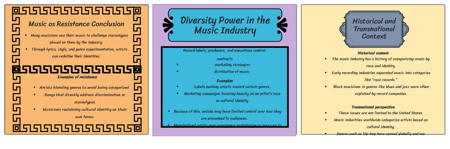
- Music as Resistance ConclusionMany musicians use their music to challenge stereotypes placed on them by the industry.Through lyrics, style, and genre experimentation, artists can redefine their identities.
- Examples of resistanceArtists blending genres to avoid being categorized.Songs that directly address discrimination or stereotypes.Musicians reclaiming cultural identity on their own terms. CONCLUSION
- Slidkalniņš: 2
- Diversity Power in the Music Industry
- Record labels, producers, and executives control:contractsmarketing strategiesdistribution of music.ExamplesLabels pushing artists toward certain genres.Marketing campaigns focusing heavily on an artist’s race or cultural identity. Because of this, artists may have limited control over how they are presented to audiences.Marginalized artists may experience exploitation or pressure to fit stereotypes.
- Slidkalniņš: 3
- Historical and Transnational Context
-
- Historical contextThe music industry has a history of categorizing music by race and identity.Early recording industries separated music into categories like “race records.”Black musicians in genres like blues and jazz were often exploited by record companies.Transnational perspectiveThese issues are not limited to the United States.Music industries worldwide categorize artists based on cultural identity.Genres such as hip-hop have spread globally and are adapted by different communities.