

Untitled Storyboard


Montāžas Teksta
- Slidkalniņš: 1
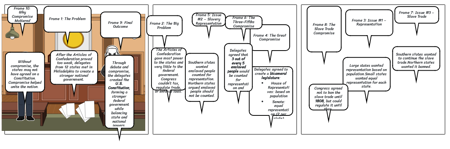
- Frame 10: Why Compromise Mattered
- Frame 1: The Problem
- Frame 9: Final Outcome
- After the Articles of Confederation proved too weak, delegates from 12 states met in Philadelphia to create a stronger national government.
- Without compromise, the states may not have agreed on a Constitution. Compromise helped unite the nation.
- Through debate and compromise, the delegates created the U.S. Constitution, forming a stronger federal government while balancing state and national powers.
- Slidkalniņš: 2
- Frame 2: The Big Problem
- Frame 5: Issue #2 – Slavery Representation
- Frame 6: The Three-Fifths Compromise
- Frame 4: The Great Compromise
- Delegates agreed that 3 out of every 5 enslaved people would be counted for representation and taxation.
- The Articles of Confederation gave most power to the states and very little to the federal government. Congress couldn’t tax, regulate trade, or enforce laws.
- Southern states wanted enslaved people counted for representation.Northern states argued enslaved people should not be counted.
- Delegates agreed to create a bicameral legislature:House of Representatives: based on populationSenate: equal representation (2 per state)
- Slidkalniņš: 3
- Frame 8: The Slave Trade Compromise
- Frame 7: Issue #3 – Slave Trade
- Frame 3: Issue #1 – Representation
- Southern states wanted to continue the slave trade.Northern states wanted it banned.
- Large states wanted representation based on population.Small states wanted equal representation for each state.
- Congress agreed not to ban the slave trade until 1808, but could regulate it until then.