

ecom


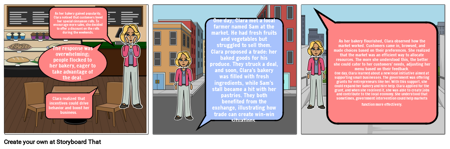
Storyboard Text
- Slide: 1
- As her bakery gained popularity, Clara noticed that customers loved her special cinnamon rolls. To encourage more sales, she decided to offer a discount on the rolls during the weekends.
- The response was overwhelming; people flocked to her bakery, eager to take advantage of the deal.
- Clara realized that incentives could drive behavior and boost her business.
- Slide: 2
- One day, Clara met a local farmer named Sam at the market. He had fresh fruits and vegetables but struggled to sell them. Clara proposed a trade: her baked goods for his produce. They struck a deal, and soon, Clara’s bakery was filled with fresh ingredients, while Sam’s stall became a hit with her pastries. They both benefited from the exchange, illustrating how trade can create win-win situations.
- Slide: 3
- As her bakery flourished, Clara observed how the market worked. Customers came in, browsed, and made choices based on their preferences. She realized that the market was an efficient way to allocate resources. The more she understood this, the better she could cater to her customers’ needs, adjusting her menu based on their feedback.One day, Clara learned about a new local initiative aimed at supporting small businesses. The government was offering grants for entrepreneurs like her. With this support, she could expand her bakery and hire help. Clara applied for the grant, and when she received it, she was able to create jobs and contribute to the local economy. She understood that sometimes, government intervention could help markets function more effectively.