

Unknown Story


Storyboard Text
- (Mackenzie Williams  P: 2)    1:Population
- 2: Genetic Variation
- 2: Overproduction of Offspring
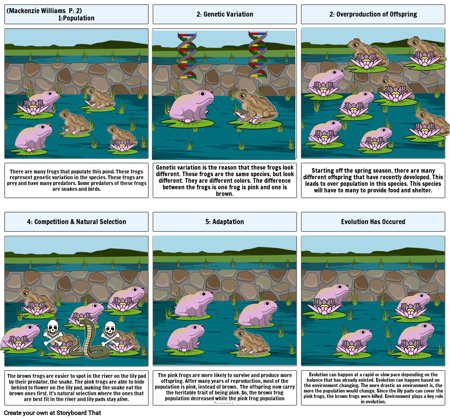
- There are many frogs that populate this pond. These frogs represent genetic variation in the species. These frogs are prey and have many predators. Some predators of these frogs are snakes and birds.
- 4: Competition & Natural Selection
- Genetic variation is the reason that these frogs look different. These frogs are the same species, but look different. They are different colors. The difference between the frogs is one frog is pink and one is brown.
- 5: Adaptation
- Starting off the spring season, there are many different offspring that have recently developed. This leads to over population in this species. This species will have to many to provide food and shelter.
- Evolution Has Occured
- The brown frogs are easier to spot in the river on the lily pad by their predator, the snake. The pink frogs are able to hide behind to flower on the lily pad, making the snake eat the brown ones first. It's natural selection where the ones that are best fit in the river and lily pads stay alive.
- The pink frogs are more likely to survive and produce more offspring. After many years of reproduction, most of the population is pink, instead of brown.  The offspring now carry the heritable trait of being pink. So, the brown frog population decreased while the pink frog population increase.
- Evolution can happen at a rapid or slow pace depending on the balance that has already existed. Evolution can happen based on the environment changing. The more drastic an environment is, the more the population would change. Since the lily pads can cover the pink frogs, the brown frogs were killed. Environment plays a key role in evolution.