

Cultural Messaging COVID-19


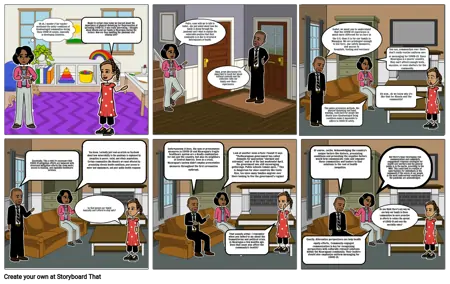
Storyboard Text
- Uh oh. I wonder if her teacher mentioned the unfair conditions of disadvantaged communities during these COVID-19 surges, especially in developing countries.
- Mami! In virtual class today we learned about the importance of physical distancing for the prevention of spreading COVID-19, it was really interesting. I thought about Abuela and our family in Nicaragua during the lecture. How are they handling the pandemic and staying safe?
- Pedro, come with me to talk to Isabel.. she just asked about how the family is doing through the pandemic and I want to explain the vulnerable position that theircommunity is in due to structural determinants of health.
- Hmm, great idea honey! It's important to teach her about cultural contexts and thecollective risks our family over there experiences.
- This makes prevention methods, like physical distancing and hand washing, really hard for people like Abuela since disadvantaged living conditions make it impossible to adhere to COVID-19 safety.
- Isabel, we want you to understand that the COVID-19 experience is much more different for us here in the U.S. than it is for our family in Managua. We are privileged enough to live here, use safety measures, and access to hospitals, testing and vaccines!
- You see, communities over there don't really receive uniform care or messaging for COVID-19. Since Nicaragua is a poorer country, they can't afford enough tests, vaccines, or even shelters for the community.
- Oh wow.. do we know why it's like that for Abuela and the community?
- Essentially. This is why it's necessary that COVID-19 mitigation efforts are balanced with structural mitigation efforts like clean water, access to housing, and equitable healthcare services.
- You know, I actually just read an article on Facebook about how vulnerability to the pandemic is explained by inequities in poorer, racial, and ethnic populations. Certain communities like Abuela's are most affected by preexisting chronic health conditions, poor access to water and employment, and poor public health response.
- So that means our family basically can't afford to stay safe?
- Unfortunately it does. the lack of preventative measures in COVID-19 and Nicaragua's fragile healthcare system are a deadly combination for not just the country, but also its neighbors in Central America. Even in a crisis, Nicaragua's system didn't employ preventative measures throughout the first coronavirus outbreak.
- Look at another news article I found! It says "The Nicaraguan government has called demands for quarantine “alarmist and extremist,” and as of the last weekend of April, the government was still encouraging gatherings. Public schools remain open..." This is dangerous for close countries like Costa Rica, too since many families migrate over there looking to flee the government's regime!
- That sounds unfair. I remember when you talked to me about the humanitarian and political crisis in Nicaragua a few months ago. Does that issue also affect the community's health?
- Exactly. Alternative perspectives can help health equity efforts. Community-engaged communication is key for recognizing perspectives with culturally relevant solutions within the Nicaraguan community. Their leaders should also emphasize uniform messaging for COVID-19.
- Of course, cariño. Acknowledging the country's unique factors like historic, preexisting conditions and preventing the negative factors would help communicate risks and empower those communities and leaders to find solutions to the root of health inequities.
- But there's hope! Developing risk communication and community engagement response strategies for health care workers and the general public is in the works, according to the WHO. This could lead to creation of opportunities for individuals in the community if the voices of our people in the most underserved conditions of the pandemic are acknowledged.
- Do you think there's any way we can help our family in those communities be more proactive in efforts to reduce the spread of COVID-19 and ease the mortality rates?