

 Register as a teacher
Untitled Storyboard


Storyboard Text
- Slide: 1
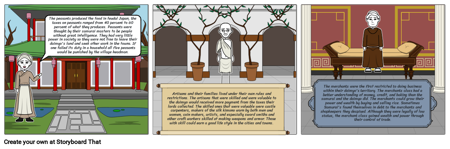
- The peasants produced the food in feudal Japan, the taxes on peasants ranged from 40 percent to 60 percent of what they produces. Peasants were thought by their samurai masters to be people without great intelligence. They had very little power in society so they were not free to leave their daimyo's land and seek other work in the towns. If one failed its duty in a household all five peasants would be punished by the village headman.
- Slide: 2
- Artisans and their families lived under their own rules and restrictions. The artisans that were skilled and were valuable to the daimyo would received more payment from the taxes their lords collected. The skilled ones that were valuable were castle carpenters, makers of the silk kimono worn by both men and women, coin makers, artists, and especially sword smiths and other craft workers skilled at making weapons and armor. Those with skill could earn a good life style in the cities and towns.
- Slide: 3
- The merchants were the first restricted to doing business within their daimyo's territory. The merchants class had a better understanding of money, credit, and baking than the samurai and the daimyo did. The merchants could grow their power and wealth by buying and selling rice. Sometimes Samurai's found themselves in debt to the merchants and shopkeepers they despised. Although they were legally of low status, the merchant class gained wealth and power through their control of trade.
Over 40 Million Storyboards Created
No Downloads, No Credit Card, and No Login Needed to Try!
