

 Register as a teacher
Untitled Storyboard


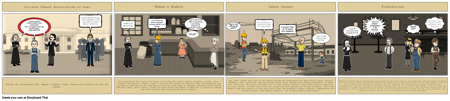
Storyboard Text
- Slide: 1
- Citizens Demand Reevaluation of Laws
- A great democracy has got to be progressive, or it will soon cease to be either great or a democracy...
- I deserve rights!I need a better work enviroment!You are trying to take my spirits away?THIS WON T DO!
- During the Progressive Era, Women's Rights, Labor Issues and Prohibition are key issues.
- Slide: 2
- Women's Rights
- I just want to be able to spend my own money without my husband's opinion.
- I do not want my precious daughter working until she is old enough.
- I want to be able to vote!
- Work?
- The Progressive Era begins with women not having most basic rights, examples: voting, labor, economic and property rights, right to divorce and custody of children, The 19th Amendment was ratified in 1920 due to the hard work of activist like Susan B. Anthony, Elizabeth Cady Stanton and Alice Paul. Ida B. Wells, fought for both racial and women's rights but it would be towards the 1960's before most progress was made racially.
- Slide: 3
- Labor Issues
- Maybe they will pay us more?!
- We should form a union and make our boss listen!
- I almost Fell to my death this morning!
- I want to go home to my mother!
- The labor issues that were up for debate during the Progressive Era were better wages, shorter workdays, safe conditions, and restricting child labor. People were working themselves to death for little pay. The people realized that if they worked together, they could pressure employers to care. Unions, strikes, and collective bargaining were growing and having an impact. State and Federal laws were passed to help with child labor and workplace safety, workers' compensation for injured workers, and welfare benefits, all of which made a huge impact.
- Slide: 4
- Prohibition
- This is a priviate establishment! No protests inside!
- While everyone is busy, I am going to stash some spirits outside to sell to the gangsters!
- Against God?
- Look at everyone! This is against God!
- Prohibition during the Progressive Era took a morality issue and turned it into organized crime with gangs everywhere and loose trigger fingers. Religious organizations thought that it would make society better, less domestic violence, and rid them of all problems with saloons. The 18th Amendment and the Volstead Act banned the manufacture, transportation, and sale of alcoholic beverages. However, this led to a decline in tax revenue, a rise in crime, and an outcry to reverse the decision by the majority of Americans. The repeal in 1933 with the ratification of the 21st Amendment let this no longer be an issue, but we had already opened the can of worms that was called organized crime, and we have seen a decline, but it is very much still a present-day issue.
Over 40 Million Storyboards Created
No Downloads, No Credit Card, and No Login Needed to Try!
